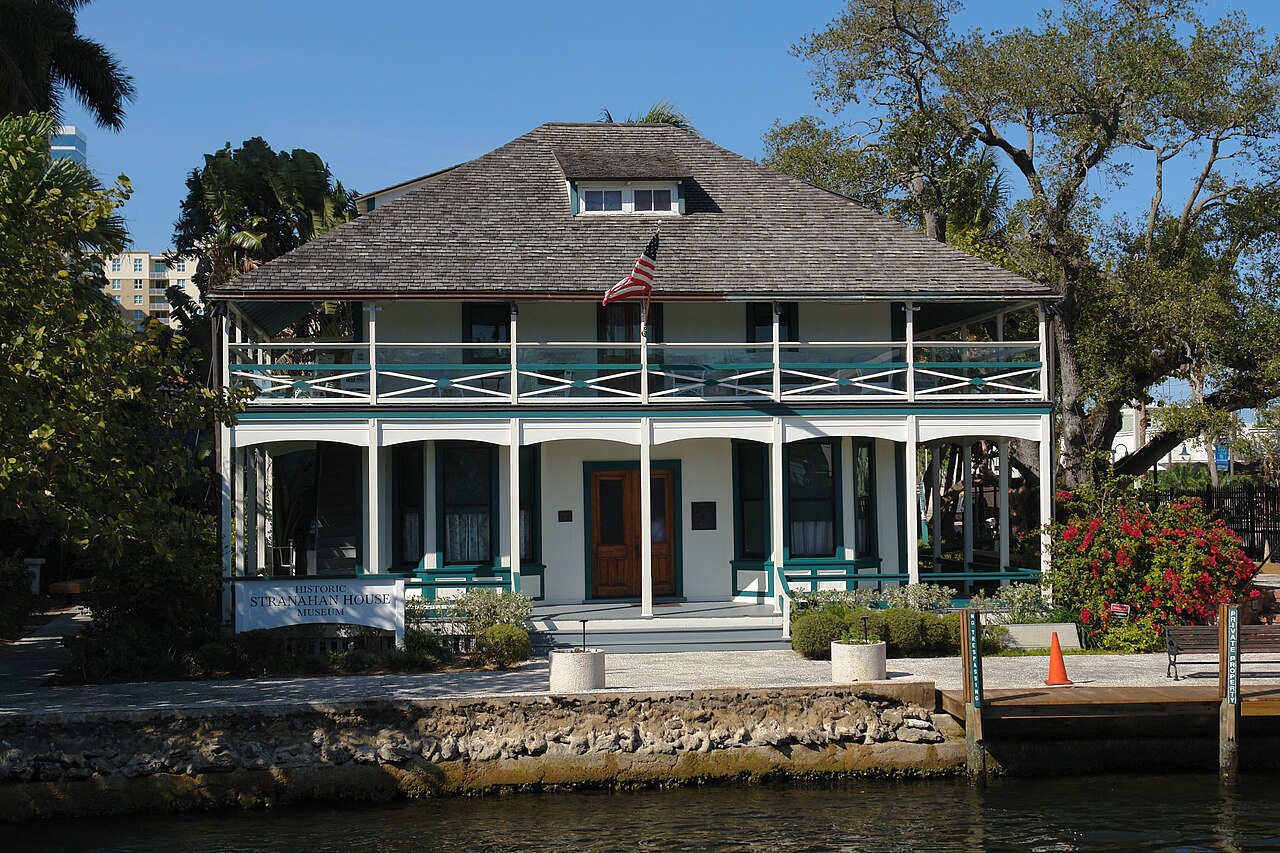
Historic Stranahan House Museum
The house the city grew around
⏱ 1-1.5 hours👤 All ages$$
Get Tickets
Get Stranahan House Tickets
Skip the line · mobile tickets accepted at the door
The house earns its landmark status twice — as the county's oldest surviving structure, and as the stage of its founding drama. Frank Stranahan arrived in 1893 to run the New River ferry, built the trading operation that anchored the settlement (the Seminole trade was the economy: otter pelts, egret plumes, alligator hides moving north; cloth, tools, and sewing machines moving south — the tours handle the trade's complicated history squarely), and in 1901 raised this house as store below, community hall above, its broad porches engineered for the river breeze and the business of a town being born. Ivy Cromartie arrived as the frontier's first schoolteacher, married Frank, and became the more consequential Stranahan: founding the local women's movement chapters, teaching Seminole children when the state wouldn't, and advocating for Seminole rights with a persistence that earned her the tribe's lasting regard — a thread the museum treats as central, not sidebar.
The arc darkens with the city's: the 1920s land boom made Frank the town's banker and its believer — he underwrote the growth personally — and the 1926 hurricane-and-bust unraveled both; in 1929, ruined and ailing, Frank drowned himself in the river outside his door. Ivy lived on in the house four more decades — renting rooms, running a tearoom through the Depression, never relinquishing the advocacy — and after her 1971 death the preservation fight (the house survived demolition-adjacent years wedged between a restaurant and the boulevard's growth) restored it to the 1913-15 period that tours now walk. The rooms carry the texture: trading-post ledgers and goods below, the family floor above, Dade-pine bones throughout, and the porch's river theater where dugouts once lined the bank.
Visiting fit: tours run about an hour on daily schedules (check days and times; the house is volunteer-and-staff intimate), the ticket is modest, and the location — at Las Olas' western, river end — makes it the heritage anchor of the downtown stroll: pair it with the boulevard's lunch, the Riverwalk, and the NSU museum for the culture day, or arrive by Water Taxi for the full-circle joke of commuting to the ferryman's house by boat. It is the market's concentrated history hour — the whole city's origin, boom, tragedy, and conscience told in one house that watched all of it from the bank.
What to Expect
Format
The 1901 trading post where the city began — guided tours only, walking the restored store and family rooms while telling the Stranahans' full founding story, Seminole trade to boom, bust, and Ivy's long advocacy. About an hour, at Las Olas' river end.
Best Time
Midday tour slots fold neatly into the Las Olas stroll; winter season runs fullest. Check the daily schedule — the house is intimate and tours cap small.
Duration
An hour to ninety minutes.
Tips
Take the guided tour — it's the only entry and the storytelling is the museum. Stand on the river porch and read the skyline against the dugout era. Arrive by Water Taxi for the ferryman's-house full circle. Pair with the boulevard's lunch.
⚡ Quick Picks
Best For
The history hour every city trip owes itself — origin, boom, tragedy, and conscience in one house.
Families
Short, story-driven, and full of trading-post objects — the rare house tour that holds a ten-year-old.
Couples
The porch's river light and the Stranahans' saga make an unexpectedly affecting hour before the boulevard's dinner.
Pair With
Las Olas at the door, the Riverwalk and NSU museum beyond — the downtown culture circuit's anchor.
Time Needed
An hour plus the stroll.
Ready to book Stranahan House?
Get Tickets →Frequently Asked Questions
Why is this house the city's origin?
It was the settlement — Frank Stranahan's trading post served as store, bank, post office, and hall while the town assembled around it, with the Seminole trade as the founding economy.
What's Ivy's story?
The frontier's first teacher, Frank's partner, and the city's conscience — educating Seminole children when the state wouldn't and advocating for decades. The museum treats her as the main character she was.
Is the story really told straight?
Unusually so — the trade's complications, the boom Frank banked, the bust that broke him, and his death in the river are all in the tour. It's history with the varnish off.
How do tours work?
Guided only, about an hour, on daily schedules that cap small — check times and book simply. The ticket is modest; the porch is priceless.
What's nearby?
Everything downtown — the house anchors Las Olas' river end, with the Riverwalk, the NSU museum, and the boulevard's dining mile walkable, and the Water Taxi docking alongside.
More Fort Lauderdale Attractions
Browse all →
Las Olas Boulevard
The boulevard that connects everything — a mile-plus of sidewalk cafés, galleries, and date-night rooms running from downtown's Riverwalk to the beach, bridging the canal district where the city's gondola-and-yacht life idles past. Free to stroll, dangerous to browse.
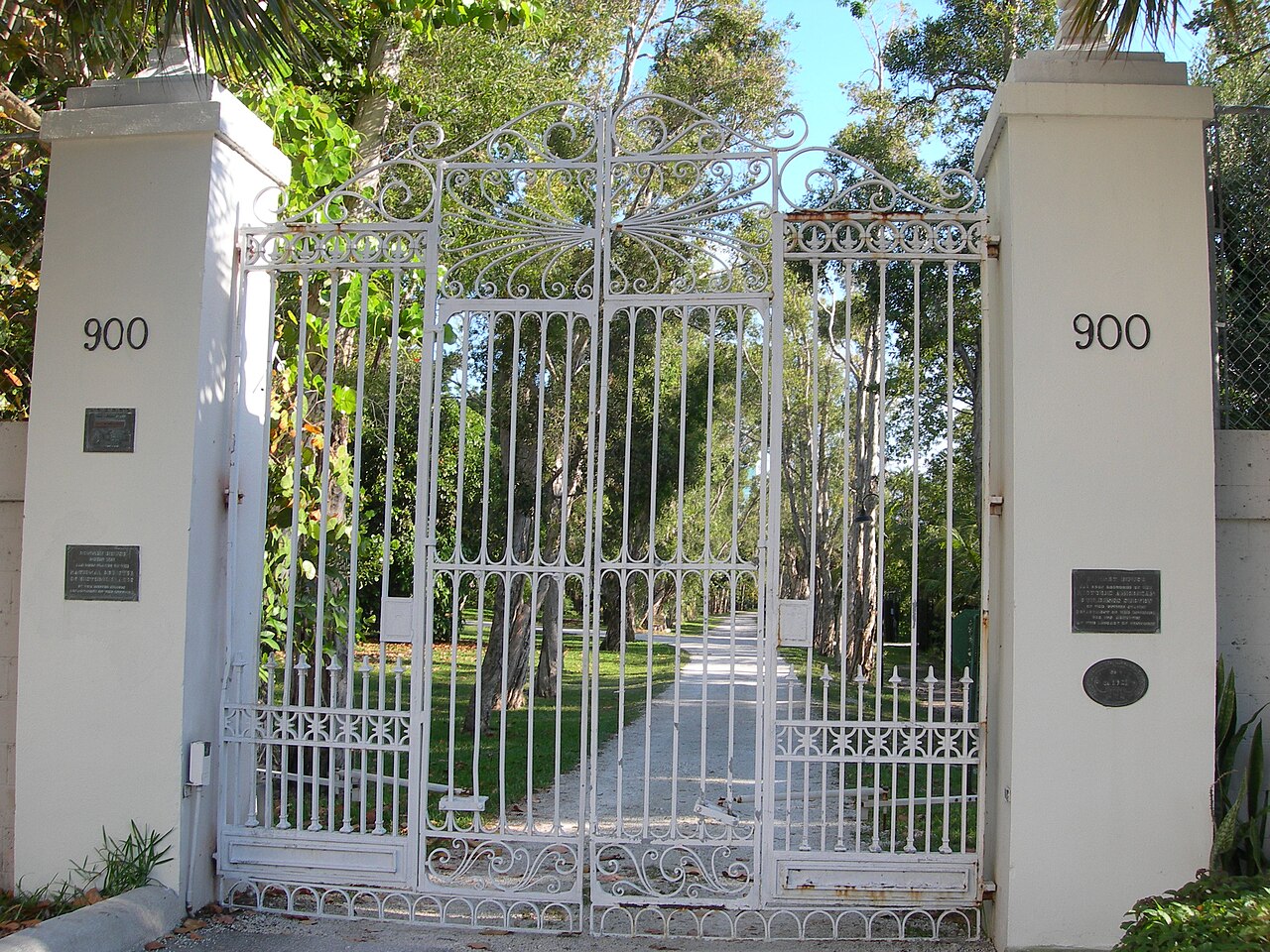
Bonnet House Museum & Gardens
The artists' island fantasy — a 1920s plantation-style estate on 35 beachfront acres where painter Frederic Bartlett and his wife Evelyn built a whimsical world of studio murals, courtyard menageries, orchids, and resident monkeys. Tours reveal it room by eccentric room.
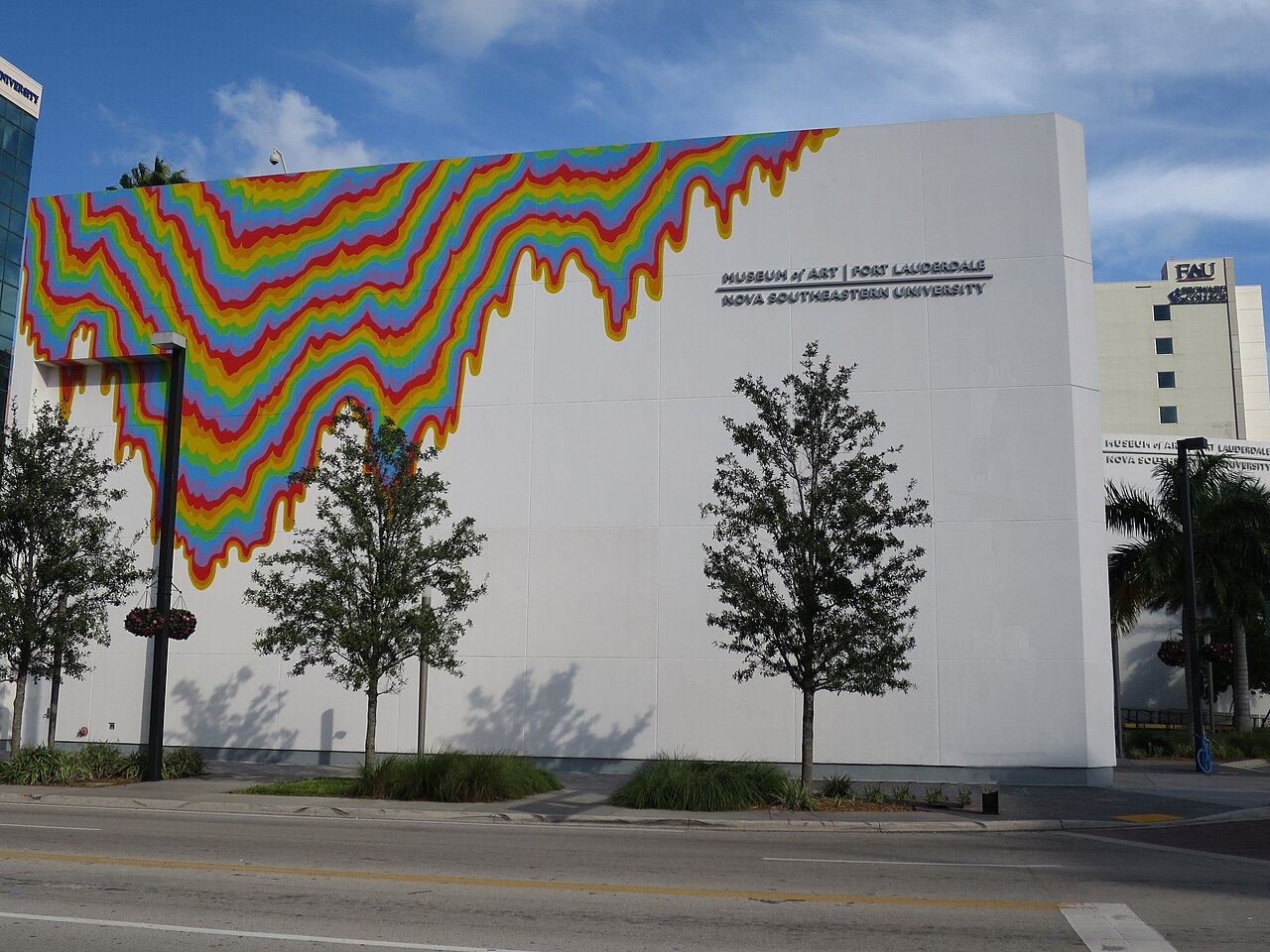
NSU Art Museum Fort Lauderdale
The city's serious art anchor — a curving Postmodern landmark on Las Olas holding the hemisphere's deepest William Glackens collection, a famous CoBrA trove, and ambitious rotating shows. The grown-up culture stop downtown deserves.